Bienvenidos a Tours en Iquitos

Travel Guide
PACAYA SAMIRIA NATIONAL
RESERVE:
Pacaya Samiria: Nature, Wildlife, and Adventure in the Heart of the Amazon
There are places in the Amazon that you simply visit.
And there are others that you truly explore.
Pacaya Samiria National Reserve belongs to the second category.
Covering more than 2 million hectares of rainforest, rivers, oxbow lakes, and wetlands, Pacaya Samiria is one of Peru’s largest protected natural areas and one of the most important Amazonian territories for biodiversity conservation.
Here, the rainforest transforms with the changing river levels. Vast flooded forests merge with lagoons, streams, and waterways where wildlife can be encountered at every turn.
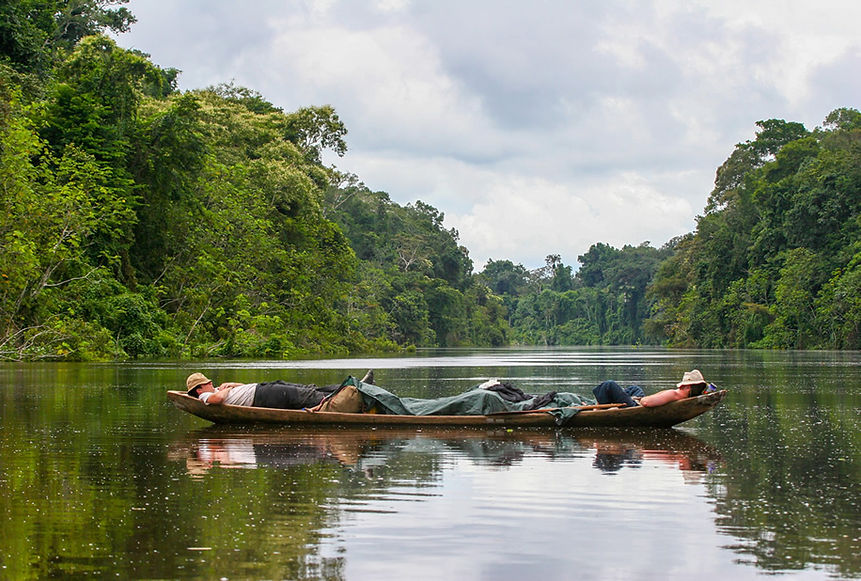
Navigating through an oxbow lake at sunrise. Listening to the rainforest as night falls. Searching for river dolphins. Watching monkeys move through the treetops. Exploring remote waterways by canoe in search of caimans. Sharing meaningful moments with Amazonian communities.
Pacaya Samiria is not simply about discovering the rainforest. It is about immersing yourself in it.
What Is Pacaya Samiria National Reserve?
Pacaya Samiria National Reserve is one of the largest protected natural areas in Peru.
Established in 1972, it is located in the Loreto region, where the vast watersheds of the Marañón and Ucayali rivers converge. The reserve covers approximately 2,080,000 hectares and extends across parts of the provinces of Loreto, Requena, Ucayali, and Alto Amazonas.
Its vast territory protects an extraordinary diversity of Amazonian ecosystems, particularly seasonally flooded forests and palm swamps.
The reserve is home to more than 1,000 vertebrate species, including mammals, birds, reptiles, amphibians, and fish, as well as hundreds of plant species. Its iconic wildlife includes the arapaima, Amazonian manatees, caimans, taricaya turtles, and several species of river dolphins and primates.
But Pacaya Samiria is much more than a list of wildlife species.
It is a living landscape where water determines the rhythm of the rainforest.

Why Visit Pacaya Samiria National Reserve?
Pacaya Samiria offers an experience unlike the more accessible jungle tours near Iquitos.
Its vast territory allows travelers to embark on river expeditions, explore flooded forests, navigate remote lagoons and streams, observe wildlife, and visit local communities involved in conservation and the sustainable use of natural resources.
During an Amazon expedition, you can:
Navigate rivers and oxbow lakes
Explore the reserve’s diverse aquatic environments aboard small boats, following winding rivers and venturing into secluded lagoons and forest waterways.
Discover Amazon rainforest wildlife
The reserve’s diverse ecosystems offer opportunities to encounter monkeys, tropical birds, caimans, river dolphins, reptiles, and numerous other Amazonian species.
Explore the flooded rainforest
Water is one of the defining features of Pacaya Samiria. During the high-water season, vast areas of rainforest become flooded, creating a completely different landscape and unique opportunities for exploration.
Experience the Amazon at night
When daylight fades, an entirely different world comes alive. Nighttime excursions offer opportunities to search for caimans and discover the sounds and movements of wildlife that remain active after sunset.
Discover Amazonian communities
Some expedition routes offer opportunities to visit local communities and learn about traditional activities and sustainable natural resource management initiatives.
Wildlife of Pacaya Samiria
One of the Main Reasons to Visit
Biodiversity is one of the greatest attractions of Pacaya Samiria National Reserve.
According to SERNANP, the reserve is home to 102 mammal species, 527 bird species, 269 freshwater fish species, 69 reptile species, and 58 amphibian species, in addition to hundreds of plant species.
Among the wildlife encounters you can look forward to during an Amazon expedition are:
Amazon River Dolphins
The rivers and oxbow lakes of the reserve provide habitat for Amazon river dolphins, including the iconic pink river dolphin.
Monkeys
The flooded forests and riverbanks offer opportunities to observe different species of Amazonian primates in their natural habitat.
Caimans
Nighttime excursions offer the opportunity to search for caimans from small boats, using flashlights to spot them along the waterways.
Amazonian Birds
Pacaya Samiria is particularly fascinating for birdwatching enthusiasts. Herons, cormorants, macaws, and many other bird species are part of the reserve’s remarkable natural landscape.
Arapaima
The arapaima is one of the Amazon’s most iconic fish and a flagship species for conservation efforts within the reserve.
Taricaya and Charapa Turtles
These aquatic turtle species are an important part of the management and conservation programs carried out in different areas of the reserve.
Important: Wildlife watching means accepting that nature does not operate like a zoo. We cannot guarantee that a particular animal will appear at a specific time. What we can do is select routes, schedules, and activities that offer better opportunities for wildlife observation.
Pink River Dolphins in Pacaya Samiria
One of the Most Sought-After Wildlife Experiences in the Amazon
Encountering a wild pink river dolphin is an entirely different experience from seeing one in captivity.
In Pacaya Samiria, you may spot these fascinating creatures while navigating the reserve’s rivers and oxbow lakes.
Sometimes they appear for just a few seconds.
Sometimes they swim close to your boat.
And sometimes they disappear beneath the water before you have a chance to take a photograph.
That uncertainty is part of what makes the experience so special.
Our goal is not to chase wildlife, but to navigate through its natural habitats and observe these remarkable animals while respecting their behavior.


Water Is the Heart of Pacaya Samiria
Pacaya Samiria is an Amazonian landscape deeply shaped by its rivers.
Water levels change the scenery, affect accessibility, and transform the way visitors experience the reserve.
During the high-water season, rising waters reach deep into the rainforest, flooding vast areas of forest.
During the low-water season, beaches, riverbanks, and new areas for exploration emerge.
That is why the same route can feel like a completely different adventure depending on the time of year.
And this is one of the reasons why an expedition to Pacaya Samiria should never be planned based on the calendar alone.
You also need to consider:
River levels + the route + the type of experience you are looking for.
What Is the Best Time to Visit Pacaya Samiria?
What Is the Best Time to Visit Pacaya Samiria?
There is no single answer.
Pacaya Samiria National Reserve can be visited throughout different seasons of the year, and each season offers unique conditions and experiences.
Current tourism information from SERNANP identifies May to September as a recommended visiting season, while other official publications also describe May to January as a suitable period for visiting.
The rainy season generally occurs between October and April, although weather conditions in the Amazon can vary.
What Does This Mean for Your Trip?
If you are looking for boat navigation and flooded rainforest:
The high-water season transforms the landscape, allowing you to explore environments where the forest and water become almost one.
If you are interested in wildlife and birdwatching:
The low-water season can change wildlife viewing conditions and concentrate animals in certain habitats.
If you are planning your first visit to Pacaya Samiria:
We can recommend the most suitable route and expedition duration based on the season of your trip.
There Is No Such Thing as a "Bad" Amazon Season.
There is simply a different Amazon to discover in every season.
How to Get to Pacaya Samiria
For many travelers, the adventure begins before entering the reserve.
One of the most common routes starts in Iquitos, with a road journey to Nauta.
From Nauta, the journey continues by boat to the different access points of Pacaya Samiria National Reserve.
SERNANP estimates that the overland journey from Iquitos to Nauta takes approximately 2 hours, although the actual travel time may vary depending on travel conditions and the chosen entrance point.
From Nauta, navigation time depends on the route selected.
And this is where an important difference comes in:
Pacaya Samiria does not have just one entrance or offer just one type of experience.
There are different sectors and tourism routes to explore.
Pacaya Samiria Sectors and Routes
Pacaya Samiria is an immense reserve.
There is no single way to experience it.
Its rivers, lakes and rainforest cover more than two million hectares, divided into different sectors that offer completely different experiences.
Some areas allow for easier access.
Others require several days of navigation to reach remote territories where human presence is much more limited.
And among them all, there is one sector that offers a truly different experience.
The Samiria River is the best sector for a wildlife-focused adventure.
It is one of the most biodiverse areas of the reserve because its greater remoteness and limited accessibility mean that fewer travelers reach this part of Pacaya Samiria.
Other Sectors of Pacaya Samiria
This is one of the reserve’s best-known tourism sectors and one of its most frequently used access points.
Some of the routes found here include:
Nauta Caño
A channel connected to the Marañón River system, where visitors can explore flooded forests and observe birds and wildlife. SERNANP also highlights nighttime caiman-watching in this area.
Yanayacu Pucate
This route follows the Yanayacu basin and allows visitors to visit local communities and natural environments where wildlife observation and sustainable resource management activities take place.
Cocha El Dorado
One of the most iconic destinations in the reserve.
SERNANP describes it as one of Peru’s great natural landscapes and the heart of Pacaya Samiria, while also highlighting the community-based conservation and sustainable management activities carried out in the area.
Cocha El Dorado
The Heart of Pacaya Samiria
There are places that become symbols of a destination.
El Dorado is one of them.
This large oxbow lake is part of the Yanayacu-Pucate basin and is known for its landscapes, biodiversity, and the sustainable management initiatives developed by local communities.
Here, you can navigate through flooded forests, observe birds and caimans, and learn about conservation initiatives focused on species such as arapaima, arahuana fish, and taricaya turtles.
The experience also reveals something fundamental:
The conservation of the Amazon and the lives of local communities are deeply interconnected.
Pacaya River
The Pacaya River is another one of the reserve’s great natural settings.
Along its course, you will find oxbow lakes, streams, and flooded forests.
SERNANP highlights opportunities to observe birds, monkeys, dolphins, and caimans in this area.
It is an especially interesting route for travelers looking for a combination of river navigation and wildlife observation.
Tibilo Pastococha
The Tibilo sector offers a different kind of experience.
From the community of Lagunas, visitors can access the Tibilo stream, which can be explored by small canoes and offers camping options for overnight stays.
The route is known for its flooded forests, aguaje palm trees, monkeys, and birds.
It is an especially appealing alternative for travelers seeking a more remote and adventurous experience.
What to Do in Pacaya Samiria
Pacaya Samiria cannot be reduced to a single activity.
Depending on the route and duration of your expedition, you can combine a variety of experiences:
River and Oxbow Lake Navigation
The main way to explore many areas of the reserve.
Jungle Walks
Venture into the rainforest to discover plants, insects, birds, and other wildlife.
Night Excursions
When night falls, the landscape changes completely.
Wildlife Observation
Look for monkeys, birds, dolphins, caimans, and other species.
Birdwatching
An ideal activity for those who enjoy photography and nature.
Community Visits
Discover Amazonian ways of life and learn about sustainable resource management projects.
Fishing
Depending on the route and authorized activities, visitors may enjoy fishing experiences connected to the Amazonian environment.
Camping
For those who want to take the experience a step further and spend the night deep in the rainforest.
SERNANP identifies these activities, among others, as part of the different tourism routes within the reserve.
Sleeping in the Rainforest
When the Amazon Becomes Your Room
Sleeping in Pacaya Samiria is not simply about finding a place to stay.
It is about listening.
The sound of insects.
Nocturnal birds.
The movement of the water.
Animals moving through the trees.
Depending on the route, visitors can stay in lodges, shelters, and campsites. SERNANP identifies different accommodation services associated with the reserve’s tourism routes and local tourism groups.
For those seeking a more immersive experience, an expedition with camping can be one of the most memorable ways to experience Pacaya Samiria.


Fishing and Conservation
Fishing has always been an important part of the relationship between Amazonian communities and the rivers.
However, within a National Reserve, fishing activities must be carried out according to the regulations and activities permitted in each area.
Pacaya Samiria is also a territory where community-based sustainable resource management initiatives have been developed, including conservation efforts involving iconic species such as arapaima and taricaya turtles.
That is why, when we talk about fishing in Pacaya Samiria, we are also talking about:
local knowledge + conservation + sustainable use of the forest and aquatic resources.
Amazonian Communities and Culture
Pacaya Samiria is not an empty rainforest.
It is a territory where numerous Amazonian communities have developed ways of life deeply connected to the rivers, forests, and natural resources around them.
On certain tourism routes, visitors can visit local communities and learn about traditional activities and sustainable resource management projects.
The experience may include:
-
Discovering local products and handicrafts.
-
Learning about traditional economic activities.
-
Visiting conservation projects.
-
Sharing experiences with local community members.
-
Understanding how tourism can contribute to the local economy.
In Yanayacu Pucate, for example, SERNANP highlights community visits and activities related to the sustainable management of natural resources.

An Amazon That Needs to Be Protected
Visiting Pacaya Samiria also means understanding why this territory is so important.
The reserve protects vast areas of flooded forests and aguajales, wetlands dominated by aguaje palm trees.
Aguajales are essential ecosystems for numerous species and play an important role in carbon storage.
Conservation does not happen only inside an office.
It also happens in local communities.
At forest monitoring posts.
Through sustainable resource management projects.
And through the way each visitor behaves during their journey.
That is why we believe travel should leave something positive behind.
For the traveler.
For the communities.
And for the Amazon.
What to Pack for Pacaya Samiria
A good expedition begins with packing wisely.
We recommend bringing:
-
Lightweight, quick-drying clothing.
-
Long pants.
-
Long-sleeved shirts or tops.
-
A hat or cap.
-
Sunscreen.
-
Insect repellent.
-
A reusable water bottle.
-
A headlamp.
-
A camera and extra batteries.
-
Waterproof bags to protect your equipment.
-
Sandals and/or suitable footwear for jungle walks.
-
A poncho or rain jacket.
-
Personal medications.
-
Personal documents.
And something that is often overlooked:
Pack Less.
On an Amazon expedition, a small, well-organized bag is much more practical than a suitcase filled with unnecessary things.
How Many Days Do I Need to Visit Pacaya Samiria?
This is one of the most important questions.
And the answer depends on what you want to experience.
2–3 Days
An introduction to the reserve.
Ideal if you have limited time and want to combine river navigation, wildlife observation, and some rainforest activities.
4 Days
Allows for a more complete and less rushed experience.
You can combine different activities and spend more time observing wildlife.
5–6 Days
This is when the experience really starts to feel like an expedition.
More navigation.
More opportunities to explore different environments.
More time for wildlife observation.
More opportunities to experience the rainforest without rushing.
7 Days or More
For travelers seeking a deeper, more remote experience with more time for exploration.
What Type of Traveler Will Enjoy Pacaya Samiria Most?
If You Love Wildlife
Pacaya Samiria can be an excellent choice for you.
If You Are a Photographer
The combination of water, rainforest, birds, and wildlife offers countless opportunities for photography.
If You Are Looking for Adventure
Long expeditions, river navigation, and camping allow for a much more immersive experience.
If You Want to Disconnect
Here, your phone stops being the center of attention.
The river becomes your clock.
If You Want to Experience Amazonian Culture
Some routes allow you to combine nature with visits to local communities.
If You Want a True Expedition
Then Pacaya Samiria is certainly one of the destinations you should consider for your journey through the Peruvian Amazon.
Important Information for Your Visit
Pacaya Samiria is a Protected Natural Area, so visits are subject to the regulations established by SERNANP.
Currently, SERNANP indicates that visitors to the reserve must arrange their trip through authorized tour operators or authorized local tourism groups. It also establishes visiting hours from 6:00 a.m. to 5:00 p.m.
Access points, routes, services, and conditions may vary depending on the sector and the season.
For this reason, we recommend planning your expedition in advance and working with authorized operators.
Before your trip, we verify current conditions and coordinate the most suitable route for your experien
Pacaya Samiria Is Not for Everyone
And that is precisely what makes it special.
If you are looking for a destination where you can get off the bus, take a few photographs, and return to your hotel, there are probably simpler options.
But if you want to:
navigate for hours,
enter small waterways,
search for wildlife,
walk through the rainforest,
listen to the jungle at night,
meet local communities,
sleep surrounded by nature,
and accept that the Amazon decides when each animal will appear...
then Pacaya Samiria is for you.
Our Pacaya Samiria Expeditions
We Design the Journey Around Your Experience
Not every traveler is looking for the same thing.
That is why we can help you choose:
the route + duration + activities + type of accommodation
based on what you genuinely want to experience.
Looking for Wildlife?
We can design an experience focused on wildlife observation.
Looking for Adventure?
We can prioritize river navigation, jungle walks, nights in the rainforest, and longer expeditions.
Looking for Culture?
We can incorporate experiences with local communities.
Have Only a Few Days?
We can find a route that allows you to make the most of your time.
ç
Want a True Expedition?
Then we can design a multi-day itinerary with more time deep inside the reserve.
Your Expedition Starts Here
The journey begins in Iquitos.
First, the road.
Then, the river.
And finally...
the rainforest.
We don't know exactly which animal will appear.
We don't know what kind of sunrise we will encounter.
We don't know what sounds we will hear during the night.
But we do know one thing:
Pacaya Samiria Is Not Easily Forgotten.
Frequently Asked Questions About Pacaya Samiria
Where Is Pacaya Samiria Located?
Pacaya Samiria National Reserve is located in the Loreto region of the Peruvian Amazon, between the basins of the Marañón and Ucayali rivers.
Can I Visit Pacaya Samiria from Iquitos?
Yes. One of the most common routes begins with a journey from Iquitos to Nauta, followed by a boat trip to the reserve’s different tourism sectors.
How Much Time Do I Need?
You can take shorter trips, but for a more complete experience, we recommend spending several days in the reserve. The ideal duration will depend on the route and type of experience you are looking for.
What Is the Best Time to Visit Pacaya Samiria?
SERNANP currently identifies May to September as a recommended visiting season, although conditions in the reserve change throughout the year and each season offers a different experience.
Can I See Pink River Dolphins?
Amazonian river dolphins inhabit the rivers and aquatic environments of the reserve, but as they are wild animals, sightings cannot be guaranteed.
What Animals Can I See?
Depending on the route and conditions, you may encounter dolphins, monkeys, birds, caimans, reptiles, fish, and many other species. SERNANP records exceptional biodiversity within the reserve.
Can I Camp?
There are routes and experiences that include camping. Options depend on the sector and the authorized tour operation.
Can I Visit the Reserve on My Own?
SERNANP indicates that tourism access must be arranged through authorized tour operators or authorized local tourism groups.
Is Pacaya Samiria Safe?
Like any expedition in a remote natural environment, visiting Pacaya Samiria requires proper planning and appropriate guidance. We recommend traveling with an authorized operator and following the instructions of reserve personnel.
Is Pacaya Samiria Suitable for Children?
It can be, but this depends on the child’s age, the duration of the expedition, travel conditions, and the activities selected. We can recommend an experience suited to each family.
Pacaya Samiria te espera
A reserve spanning millions of hectares.
Rivers that change with the seasons.
Flooded forests.
Hidden oxbow lakes.
Dolphins.
Monkeys.
Birds.
Caimans.
Communities.
And an Amazon that still has the power to surprise you.
Come Explore It.
PACAYA SAMIRIA
**Don’t just come to see it.
Come experience it.**

